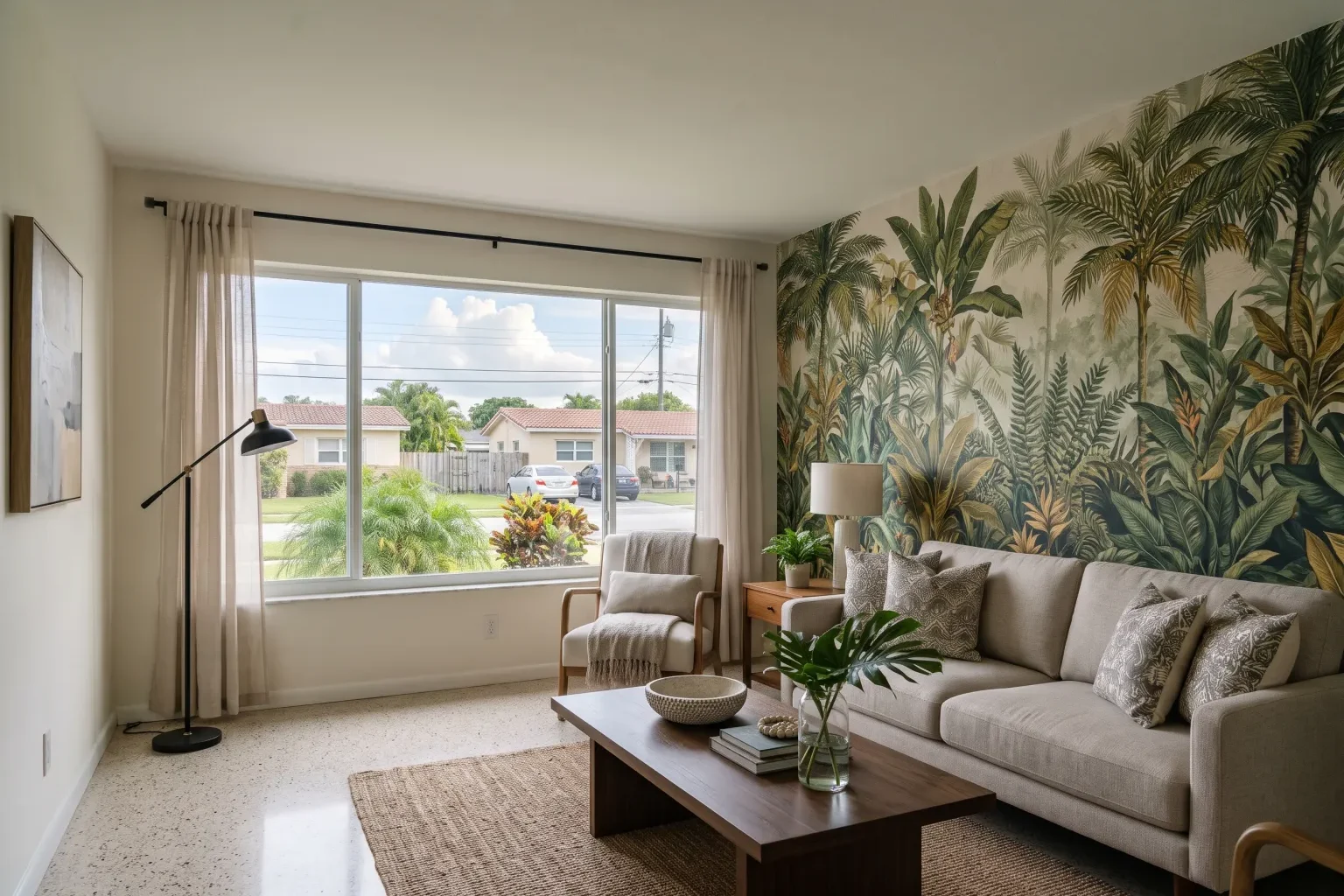
The short answer
Peel and stick wallpaper fits rentals, accent walls, closets and short-term updates where you want easy removal. It needs a clean, smooth, fully cured satin or semi-gloss painted surface, a plumb starting line, careful overlap or butt seams, and gentle handling to avoid stretching.
Self-adhesive wallpaper looks like the easy option on the box: pull the liner, press it to the wall, done. In practice, peel and stick panels grab instantly, stretch when pulled, and refuse to stay put on dusty or freshly painted surfaces. Many of the calls we get at Dream Wallpaper Installers come from Hialeah homeowners and renters who tried a few strips themselves and ended up with crooked edges and bubbles. Hiring someone to hang a product sold as do-it-yourself can sound odd, but the difference between an amateur result and a crisp one comes down to wall prep, layout and technique. Here is how we approach it.
Who peel and stick is really for
Removable wallpaper solves a specific set of problems. Apartment and condo renters across Hialeah and Hialeah Gardens can change a room without risking their deposit. Homeowners who like to refresh a nursery, a home office backdrop or the inside of a bookcase every few years avoid paste and stripping later. It also suits small, contained areas: a closet interior, a pantry door, stair risers, the back panel of a built-in.
It is a weaker choice for large rooms with many corners, for very humid spaces like a bathroom with a shower, and for walls with heavy texture. Adhesive strength is lower than traditional paste, and in a South Florida summer, heat and moisture can soften the glue so edges curl. Where those conditions exist, we will tell you honestly and suggest a pasted alternative.
The surface decides whether it sticks
Self-adhesive products bond only as well as the paint under them. Flat and matte paints are porous and chalky, so the adhesive grabs the paint film rather than the wall and can pull it off on removal. Satin, eggshell and semi-gloss finishes usually give the best bond. Fresh paint needs time to cure, typically several weeks, because solvents still leaving the film can create bubbles behind the panel.
Our prep is simple but strict. We fill holes, sand patches smooth, and wipe the wall down to remove dust, cooking film and any residue from cleaning products. If the paint is flat or shows chalking, we recommend a coat of a primer formulated for removable wallcoverings, or a satin topcoat, and we schedule the install after it has cured. Textured walls are only a match for peel and stick if the texture is light; otherwise the panels touch only the high points and lift.
- Satin, eggshell or semi-gloss finish preferred
- Fully cured paint, never freshly rolled
- Clean, dust-free and smooth surface
- Light texture at most
Hanging technique, step by step
Layout comes first. We measure the wall, figure out how many panels it needs and where seams will fall, and avoid landing a seam right at the edge of a window where it would be easy to catch. A laser or level marks a plumb line for the first strip, since ceilings and corners in older homes are rarely true.
With the first panel, we peel back only a short section of the liner at the top, align the edge with the plumb line, and leave a little extra at the ceiling. Then we work downward, pulling the liner a few inches at a time while pressing the panel on with a felt-edged smoother, moving from the center to the edges. Pulling the full liner off at once is how panels stick to themselves and get ruined.
Pattern matching on peel and stick has one trap: the material stretches. Tugging a panel to line up a motif stretches it, and when it relaxes later, the seam opens. So we reposition rather than pull. Depending on the brand, seams either butt edge to edge or overlap by a narrow margin built into the design. We follow the specific product's instructions.
Trimming is done once each panel is firmly seated. A sharp snap-off blade and a wide taping knife give clean edges along the ceiling, baseboard and casing. Outlets and switches get an X cut, then a neat trim around the box after the cover plate is removed.
Factors that change the cost
Pricing follows the work involved. Walls that need repairs, priming or a new satin coat before installation add a step and a cure period. Thin, inexpensive vinyl films wrinkle and stretch, which slows hanging, while thicker removable products with a fabric or non-woven layer handle more predictably.
A large pattern repeat means more panels to get continuous motifs, plus more careful layout. Room size, the number of openings to trim around and ceiling height complete the scope. A tall wall above a staircase is a very different job than a closet.
Living with removable wallpaper
Most peel and stick surfaces wipe clean with a soft, damp cloth and a drop of mild dish soap. Skip abrasive pads and harsh solvents, which can dull the print. If an edge lifts, press it back with a smoother, and for stubborn spots a little wallpaper seam adhesive holds it.
Climate control helps the adhesive last. Keep the indoor air cool and dry, especially from May through October when Hialeah humidity peaks. When it is time for a change, peel slowly at a low angle, close to the wall. If the adhesive resists, a hair dryer on low warms it enough to release cleanly.