The short answer
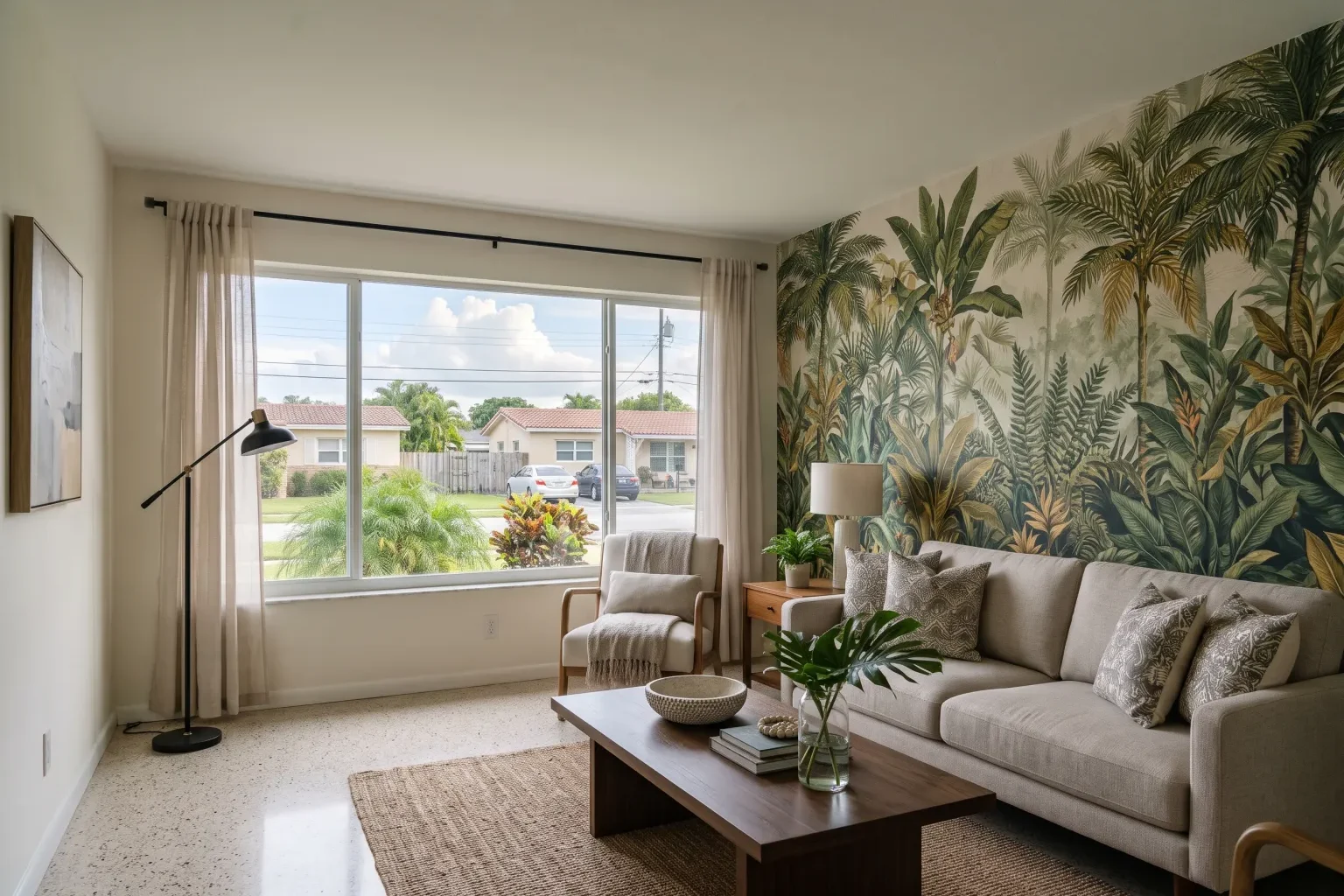
An accent wall is a single wall papered to draw the eye, and it works well in living rooms, bedrooms, entries and dining areas around Hialeah. We repair and prime the wall, plan the pattern so it centers on the focal point, then hang, seam and trim it by hand.
One papered wall can change how a room feels without committing the whole space to a pattern. In Hialeah homes, the accent wall usually lands behind a bed, a sofa, a dining table or a TV, and it often goes onto painted concrete block or drywall that has seen years of air conditioning and humid summers. Dream Wallpaper Installers handles the full job for a single feature wall: checking the surface, fixing what needs fixing, priming for the paper you picked, and hanging it so the seams sit tight and the pattern reads cleanly from across the room. This page explains when a feature wall makes sense, what our prep and hanging steps look like, what moves the cost up or down, and how to keep the wall looking sharp in a South Florida house.
Rooms where a single papered wall makes the most sense
A feature wall earns its place when the room already has a natural focal point. The wall behind a headboard, the long wall a sectional faces away from, the end wall of a hallway, or the surface behind a built-in shelf are the usual candidates. Papering only that plane gives you color and texture where people actually look, while the other three walls stay calm and easy to repaint.
It is also a practical choice when budget or patience is limited. One wall means fewer rolls, less time with furniture pushed around, and an easier change later if your taste shifts. Renters with landlord approval and owners testing a bold print before committing to a full room often start here.
There are a few cases where we suggest a different plan. If the wall you love is broken up by several windows, an AC return and a thermostat, the pattern may get chopped into small pieces and lose its impact. A wall that takes direct afternoon sun through west-facing glass may need a more fade-resistant material. We talk through those trade-offs during the visit instead of after the paper is up.
- Bedroom wall behind the headboard
- Living room wall opposite the entry
- Dining nook or breakfast area
- Short hallway end walls and entry foyers
- Home office wall that shows up on video calls
Getting the wall ready: repairs, sealing and primer
Wallpaper shows every bump underneath it, so most of the real work on an accent wall happens before the first strip goes up. We start by checking how the wall is built and what is on it. Many older Hialeah houses have plaster or skim coat over concrete block, while additions and newer interiors are usually drywall. Each takes patching and primer a little differently.
Nail holes, anchor holes from old shelves, dents and hairline cracks get filled and sanded flat. Glossy paint gets dulled so primer can grip. If there is old paper or a shiny, flaking coat of paint, it comes off rather than being buried. Where we find soft spots or staining that suggests moisture, we point it out, because papering over a damp patch in a humid climate tends to end with lifting seams or mildew.
Once the surface is smooth and dry, we roll on a wallpaper primer suited to the product. Pasted papers, prepasted papers and peel-and-stick vinyls each prefer a different base. A good primer gives the paste something even to hold, lets the strips slide for pattern alignment, and makes the wall much easier to strip clean years from now.
How we hang an accent wall, step by step
The goal on a single wall is symmetry. Guests should see the motif centered on the bed, the fireplace or the middle of the wall, not drifting off to one side because the first strip started in a corner.
On larger prints we often dry-lay a couple of strips on the floor first so you can see how the motif will fall before anything is pasted. That is also the moment to decide whether a bold element should sit at eye level or just above the furniture line.
- Measure the wall height and width, note outlets and switches, and calculate strips with the pattern repeat included.
- Find the visual center and snap a plumb line so the first strip is perfectly vertical even if the corners are not.
- Cut strips with extra length top and bottom, and number them so the sequence stays in pattern order.
- Paste or activate each strip according to the maker's instructions, booking it when the paper calls for it.
- Hang from the center line outward, matching the design at every seam and smoothing out air with a soft brush or plastic smoother.
- Roll seams lightly and wipe away any paste right away so it does not dry shiny on the face.
- Trim at the ceiling, baseboard and adjoining walls with a fresh blade against a wide knife for a crisp edge.
- Cut neatly around outlet and switch boxes, then reinstall the cover plates.
What changes the cost of a feature wall
We quote each accent wall after seeing it, because two walls of the same size can take very different amounts of time. The main drivers are below, and we explain which ones apply to your room when we give you the number.
If you have not bought the paper yet, it helps to show us your shortlist before ordering. We can tell you how many rolls each option will need with its repeat and whether any of them will need extra prep on your particular wall.
- Wall condition: smooth painted drywall is quick, while cracked plaster, textured finishes or old paper add prep hours.
- Paper type: prepasted and peel-and-stick go up faster than unpasted, grasscloth, or delicate hand-printed papers.
- Pattern repeat: a large drop match uses more material and takes longer to line up than a random or straight match.
- Wall size and ceiling height: tall great-room walls need scaffolding or extra ladder work and more careful seam handling.
- Interruptions: windows, doors, niches, AC vents and many outlets mean more cutting and fitting.
Keeping the finished wall in good shape
Give the paste time to cure before hanging artwork or pushing furniture back tight against the wall. During that stretch, keep the AC running at a steady setting rather than shutting the house up hot and humid while you are away; sudden swings in moisture are hard on fresh seams.
For routine care, dust with a dry microfiber cloth or a soft brush attachment. Washable and vinyl-faced papers can take a lightly damp sponge for scuffs, but test a hidden corner first and never scrub. Natural fibers like grasscloth should stay dry. If a seam lifts slightly after a stormy summer, a small amount of seam adhesive pressed in with a roller usually fixes it; call us if you would rather we handle it.
Keep a few leftover pieces rolled and stored indoors, not in a hot garage. Matching scraps make small repairs far less noticeable than a patch cut from a different dye lot.
Accent Wall Installation by city
- Accent Wall Installation in Miami Lakes
- Accent Wall Installation in Medley
- Accent Wall Installation in Hialeah Gardens
- Accent Wall Installation in Miami Springs
- Accent Wall Installation in Opa-locka
- Accent Wall Installation in Doral
- Accent Wall Installation in Miami Gardens
- Accent Wall Installation in Miramar
- Accent Wall Installation in Sweetwater
- Accent Wall Installation in West Miami
- Accent Wall Installation in North Miami
- Accent Wall Installation in Miami